Modular Data Center — Prefabricated Power, Cooling and Rack Modules
Room-scale modular data centers that combine power, cooling, racks and monitoring in prefabricated modules.
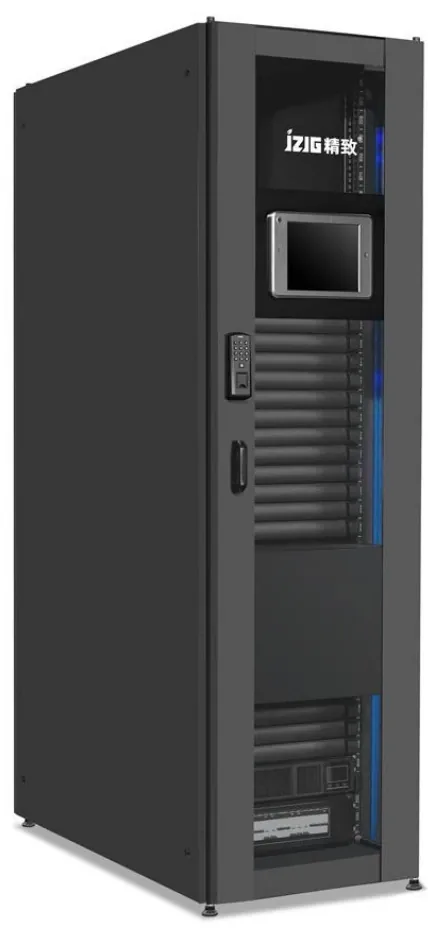
A modular data center is built from repeatable rows or pods, typically 4 to 20 racks per module, with 25 kW to 50 kW row cooling and N+1 UPS. It can be expanded in phases, achieves a PUE of about 1.3 to 1.6, and usually takes 8 to 16 weeks from approval to site delivery.
Last reviewed: 2026-11-07
Modular systems reduce site construction by moving power, cooling and containment into factory-built blocks.
The project defines the module count, redundancy and cooling type; the factory builds and tests the blocks before shipment.
Best for
- Data center expansion with phased capacity
- Sites with limited construction time
- Projects needing factory-tested modules
Key specifications
Micro vs modular vs container
| Type | Scale | Typical use |
|---|---|---|
| Micro data center | 1–4 racks | Branch/edge |
| Modular data center | Room/hall | Data center expansion |
| Container data center | Container unit | Remote/temporary |
How to choose
Define the module
Set rack count, power density and cooling type per module.
Set redundancy
Choose N+1 or 2N for power and cooling.
Plan interfaces
Define power, network and chilled-water connections.
What modular means
A modular data center is assembled from standard blocks: rack rows, cooling modules, power modules and containment. Each block is factory-built and tested, then joined on site. Capacity is added by adding modules rather than rebuilding the room.
This approach suits projects that grow in phases, sites with uncertain final load, and multi-site rollouts that need a consistent design. It also reduces on-site labor and commissioning time.
Row and pod configurations
A row module usually contains 8 to 12 racks with row-level cooling and cold or hot aisle containment. A pod module contains two rows facing a shared aisle, with power and cooling at the end. Common module sizes are 4, 8, 12 and 20 racks.
The module footprint depends on the rack depth and the aisle width. A two-row pod with 1,200 mm cabinets and a 1,200 mm aisle needs about 4.8 m of room width plus service clearance.
Power, cooling and redundancy
Power is distributed through modular UPS frames and busway or overhead cabling. Cooling is row-level or perimeter, with N+1 redundancy. Containment keeps the cold and hot air separate and allows a higher supply temperature.
Typical PUE is 1.3 to 1.6, depending on the climate and the cooling mode. Free cooling, higher chilled water temperature and variable-speed fans improve efficiency.
Phasing and delivery
Plan the final capacity at the start: busway, cooling headers, floor loading and cable routes. Then add modules as the load grows. Factory assembly and testing reduce site work to positioning, connection and commissioning.
Typical lead time is 8 to 16 weeks after drawing approval, depending on the module count and the cooling/power configuration.
Modular data center reference
| Item | Typical value | Notes |
|---|---|---|
| Module size | 4–20 racks | Row or pod |
| Rack size | 600/800 × 1200 mm | 42U |
| Cooling | 25–50 kW | Row / perimeter |
| UPS | Modular, N+1 | 50–1200 kVA |
| Containment | Cold / hot aisle | Sealed |
| PUE | 1.3–1.6 | Climate-dependent |
| Lead time | 8–16 weeks | After approval |
| Site work | 2–6 weeks | By module count |
Module size options
| Module | Racks | Typical load | Use |
|---|---|---|---|
| Small pod | 4 | 40–80 kW | Branch / edge |
| Medium row | 8 | 80–160 kW | Campus |
| Large row | 12 | 120–240 kW | Data center |
| Double row | 20 | 200–400 kW | Phased hall |
Modular vs prefabricated
| Item | Modular | Prefabricated |
|---|---|---|
| Scope | Rows / pods | Building / container |
| Racks | 4–20 | 10–100+ |
| Site work | Weeks | Months |
| Expansion | Add modules | Add modules |
| Best for | Phased halls | Rapid build |
Frequently asked questions
08 Q&A How is modular different from micro?
Can it be expanded later?
Is a container a modular data center?
What is a modular data center?
How many racks are in a module?
What PUE can a modular data center achieve?
Can a modular data center be expanded later?
What is the lead time for a modular data center?
Send us your rack schedule or floor plan
Share cabinet quantities, U heights, power loads and the destination port. Our engineering team will confirm the configuration, drawing and production lead time.
Request a quotation