Micro Data Center — 1–4 Rack All-in-One IT Room
Integrated micro data centers with cooling, UPS, power, monitoring and fire suppression in one or more cabinets.
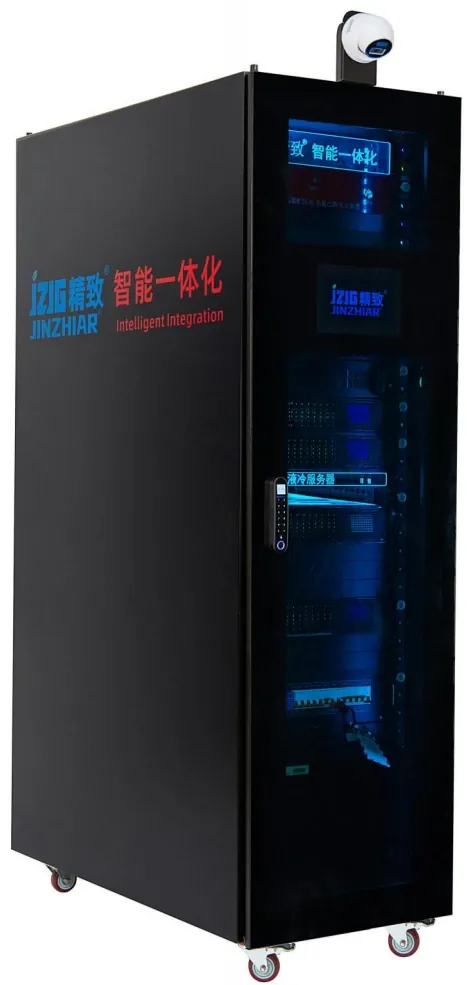
A micro data center integrates 1 to 4 racks, a 10 kVA to 30 kVA UPS, 25 kW to 50 kW cooling, fire suppression and monitoring in a 600 × 1200/1400 mm footprint per rack. It typically achieves a PUE of 1.3 to 1.5 and can be commissioned in 1 to 3 days on site.
Last reviewed: 2026-11-07
The factory-integrated cabinet arrives with internal power and cooling connections complete; site work is limited to power, network and condensate.
A single cabinet typically leaves 30U–36U for IT equipment; multi-cabinet configurations add capacity and redundancy.
Best for
- Branch offices and edge sites
- Factory automation and laboratories
- Projects without a dedicated computer room
Key specifications
Micro data center configuration
| Configuration | IT space | Cooling | UPS | Typical use |
|---|---|---|---|---|
| Single cabinet | 30U–36U | Rack AC | 10–30 kVA | Branch/edge |
| Multi-cabinet | 2–4 cabinets | Row AC | Modular | Small data room |
How to choose
Size the IT load
List servers, switches and storage; confirm the U space and power load.
Choose cooling
Rack AC for single cabinets; row AC for higher density.
Confirm site services
Check power feed, network uplink, condensate drain and heat rejection.
What a micro data center includes
A micro data center is a pre-engineered IT room built from one or more cabinets. It includes the rack, cooling, UPS, power distribution, fire suppression, access control and environmental monitoring. The site only needs power, network and a prepared floor.
It is used for edge computing, branch offices, clinics, factories, retail and campus sites. Compared with a traditional computer room, it is smaller, faster to deploy and easier to standardize across many sites.
Footprint and capacity
A single rack is typically 600 mm wide, 1,200 mm or 1,400 mm deep and 42U high. A 2-rack or 4-rack pod adds a shared cooling and power module. The IT load is usually 10 kW to 50 kW per pod, depending on the servers and the cooling capacity.
Plan 1,200 mm front clearance and 800 mm rear clearance for service. The floor must support the cabinet, UPS, batteries and cooling unit; a raised floor is optional but helps cable routing.
Cooling, power and redundancy
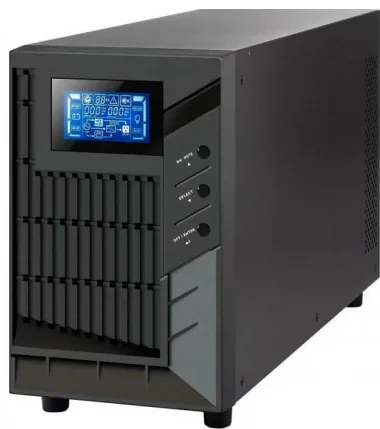
Cooling is usually a rack-mounted or row-level air conditioner, with 25 kW to 50 kW capacity per pod. The UPS is 10 kVA to 30 kVA, with N+1 or 2N redundancy. Battery runtime is typically 10 to 30 minutes.
For critical sites, add a maintenance bypass, an automatic transfer switch and a generator interface. Confirm the input voltage and earthing for the destination country.
Deployment and management
The unit is assembled and tested in the factory, then shipped as a single cabinet or split modules. Site work includes positioning, power and network connection, cooling commissioning and operator training. Typical site time is 1 to 3 days.
Remote monitoring covers temperature, humidity, power, door status and alarms. Use SNMP, Modbus or a cloud portal, and integrate the alarms into the existing building management system where required.
Micro data center reference
| Item | Typical value | Notes |
|---|---|---|
| Racks | 1–4 | Single or pod |
| Rack size | 600 × 1200/1400 × 42U | Per cabinet |
| IT load | 10–50 kW | Per pod |
| UPS | 10–30 kVA | N+1 / 2N |
| Cooling | 25–50 kW | Rack / row AC |
| Battery | 10–30 min | VRLA / lithium |
| Fire | Clean agent | Smoke / heat |
| Monitoring | Local + remote | SNMP / cloud |
| PUE | 1.3–1.5 | Site-dependent |
| Site time | 1–3 days | Commissioning |
Micro vs modular vs prefabricated
| Item | Micro | Modular | Prefabricated |
|---|---|---|---|
| Racks | 1–4 | 4–20 | 10–100+ |
| Deployment | Days | Weeks | Months |
| Cooling | Rack / row | Row / perimeter | Central |
| Best for | Edge / branch | Campus | Large site |
| PUE | 1.3–1.5 | 1.3–1.6 | 1.2–1.5 |
Micro data center options
| Option | Choices | Use |
|---|---|---|
| Rack count | 1 / 2 / 4 | Capacity |
| Cooling | Rack AC / row AC | Heat load |
| UPS | Modular / tower | Redundancy |
| Battery | VRLA / lithium | Runtime |
| Access | Card / biometric | Security |
| Monitoring | Local / cloud | O&M |
Frequently asked questions
08 Q&A How many racks fit in a micro data center?
What is the difference between micro and modular data center?
Does it need an outdoor condenser?
How many racks does a micro data center have?
What UPS size does a micro data center need?
How long does it take to deploy a micro data center?
Can a micro data center be installed outdoors?
What PUE does a micro data center achieve?
Related pages
Send us your rack schedule or floor plan
Share cabinet quantities, U heights, power loads and the destination port. Our engineering team will confirm the configuration, drawing and production lead time.
Request a quotation