Modular UPS System
50–1200 kVA modular online UPS for centralized power rooms.
A modular UPS scales from 50 kVA to 1,200 kVA in 50 kVA or 100 kVA hot-swappable modules. Double-conversion efficiency is typically 95% to 96%, output power factor is 1.0, and redundancy is N+1 or 2N. Plan 10 to 30 minutes of battery runtime and 30 to 45 working days of lead time.
Last reviewed: 2026-11-07
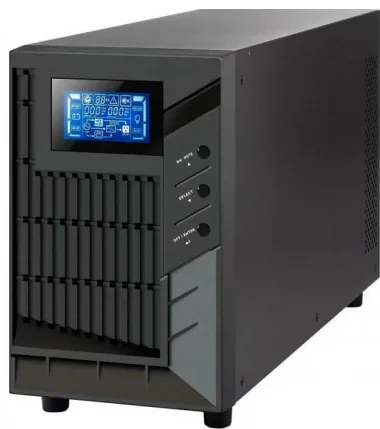
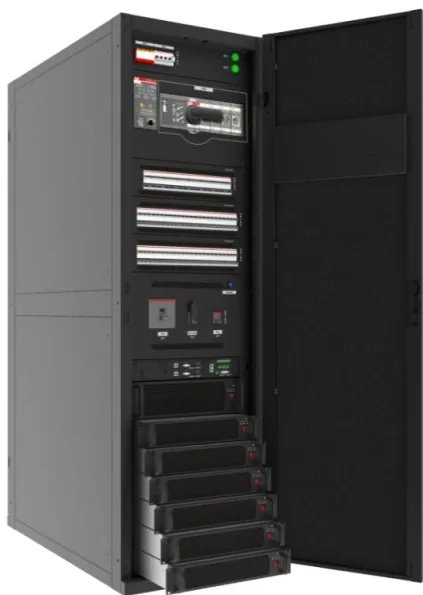
The JZ-UPS modular system is built for phased growth. Power modules, bypass modules and control modules plug into a common frame, so capacity can be added without replacing the whole system.
Typical configurations include 300 kVA, 600 kVA, 800 kVA and 1200 kVA. The system uses double-conversion online topology and can be paired with matching battery cabinets, input/output cabinets and precision busbar cabinets.
- 50 kVA or 100 kVA hot-swappable power modules
- N+1 or 2N configuration
- Double-conversion online topology
- Front-access maintenance
- Matching battery and distribution cabinets
- SNMP / Modbus monitoring options
Technical specifications
| Capacity | 50 kVA – 1200 kVA |
|---|---|
| Power module | 50 kVA / 100 kVA |
| Topology | Double-conversion online |
| Configuration | N+1 or 2N |
| Battery | VRLA or lithium cabinet |
| Typical frames | 300 / 600 / 800 / 1200 kVA |
Typical applications
- 01 Data center power rooms
- 02 Micro-module and container projects
- 03 Industrial and telecom facilities
- 04 Projects with phased capacity growth
What a modular UPS is used for
A modular UPS protects servers, storage, network equipment and cooling controls in data centers, telecom rooms, hospitals and industrial sites. It converts incoming AC power to DC, charges the battery, and converts DC back to clean AC, so the load rides through outages, sags, surges and frequency changes.
The modular design lets the UPS grow with the load. Start with two or three power modules and add modules as the IT load increases. Failed modules can be replaced while the UPS continues to supply the load, which reduces downtime and spare-parts planning.
Capacity, modules and redundancy
The system capacity ranges from 50 kVA to 1,200 kVA. Each power module is typically 50 kVA or 100 kVA, and the frame accepts 4 to 12 modules depending on the model. A 200 kVA frame with four 50 kVA modules can run N+1 with three modules carrying the load and one module as standby.
Redundancy is configured as N+1, N+2 or 2N. N+1 is common for commercial sites; 2N is used for critical data centers and hospitals. The UPS can also be paralleled with a second frame for higher capacity or dual-bus architecture.
Efficiency, input and output quality
Double-conversion efficiency is typically 95% to 96% at full load, with an ECO mode around 99% for stable grids. Input power factor is above 0.99 with low THDi, so the UPS does not distort the building supply. Output power factor is 1.0, which means 100 kVA supports 100 kW of modern IT load.
The inverter supplies a pure sine wave with tight voltage and frequency regulation. Overload capability is typically 110% for 60 minutes, 125% for 10 minutes and 150% for 1 minute. Confirm the overload curve and the bypass configuration for the project.
Batteries and runtime
Battery options include VRLA blocks in a dedicated cabinet and lithium iron phosphate racks. Runtime is usually sized for 10 to 30 minutes at full load, or for the time needed to start a generator and transfer the load. Lithium batteries take less space and have a longer cycle life; VRLA has a lower first cost.
Battery management includes temperature compensation, periodic self-test, and alarms for low voltage and open cells. For long runtime, use an external battery cabinet and confirm the room floor loading and ventilation.
Installation, cooling and delivery
The UPS frame needs front and rear access for module replacement, typically 1,000 mm in front and 800 mm at the rear. Room cooling must remove the UPS losses: at 96% efficiency, a 200 kVA UPS with 160 kW load produces about 6.7 kW of heat. Keep the battery room within the manufacturer's temperature range.
Typical lead time is 30 to 45 working days after drawing approval, depending on the frame, module count and battery configuration. Site work includes cable termination, battery installation, commissioning and load-bank testing.
Modular UPS reference specifications
| Item | Typical value | Notes |
|---|---|---|
| Capacity | 50–1,200 kVA | Frame-dependent |
| Power module | 50 kVA / 100 kVA | Hot-swappable |
| Topology | Double-conversion online | VFI-SS-111 |
| Redundancy | N+1 / N+2 / 2N | By project |
| Efficiency | 95–96% | Full load |
| ECO mode | About 99% | Stable grid |
| Input power factor | >0.99 | Low THDi |
| Output power factor | 1.0 | 100 kVA = 100 kW |
| Overload | 110% 60 min / 125% 10 min | Confirm curve |
| Battery | VRLA / lithium | 10–30 min typical |
| Bypass | Static + maintenance | Manual bypass |
| Ingress protection | IP20 | Indoor room |
Configuration options
| Option | Choices | Typical use |
|---|---|---|
| Frame | 50–1,200 kVA | Capacity planning |
| Modules | 50 kVA / 100 kVA | N+1 growth |
| Battery | VRLA / lithium | Space and runtime |
| Runtime | 10 / 15 / 30 min | Generator start |
| Parallel | 2–8 units | Capacity or 2N |
| Monitoring | SNMP / Modbus / dry contact | BMS integration |
| Input | 3P3W / 3P4W | Site supply |
| Cooling | Air-cooled | Room design |
Packing and delivery reference
| Item | Typical value | Notes |
|---|---|---|
| Packing | Wooden crate | Seaworthy |
| Added dimensions | 100–150 mm per side | By frame |
| Added weight | 150–600 kg | Frame and modules |
| Container quantity | 4–12 units per 40HQ | By capacity |
| Lead time | 30–45 working days | After drawing approval |
| Commissioning | 1–3 days | Load-bank test |
Questions buyers ask
09 Q&A Can modules be replaced without shutting down?
What battery technology is supported?
How is the UPS sized?
What is the difference between a modular UPS and a tower UPS?
How many modules do I need for N+1 redundancy?
What battery runtime is typical for a modular UPS?
Can a modular UPS be expanded later?
What efficiency does a modular UPS achieve?
What is the lead time for a modular UPS?
Related products
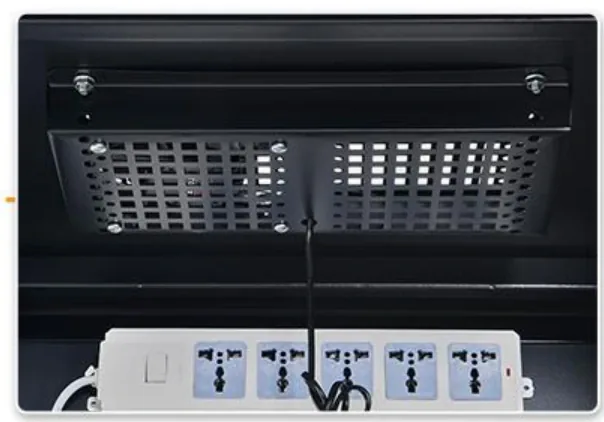 JZ-PDU Series Rack Power Distribution Unit 1U or 0U power distribution with optional breaker, SPD and metering. View details
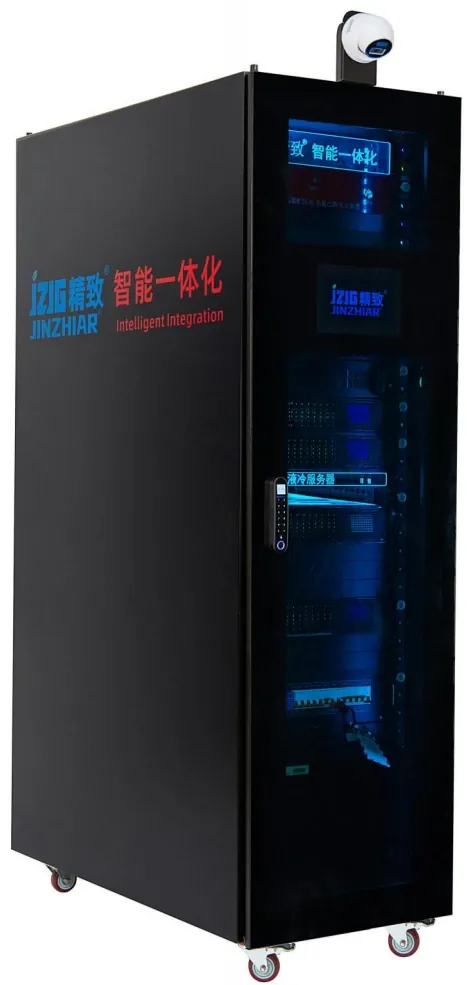 JZ-IDC Series 42U Integrated Micro Data Center Cabinet A factory-integrated 42U room with cooling, UPS, fire and monitoring. View details
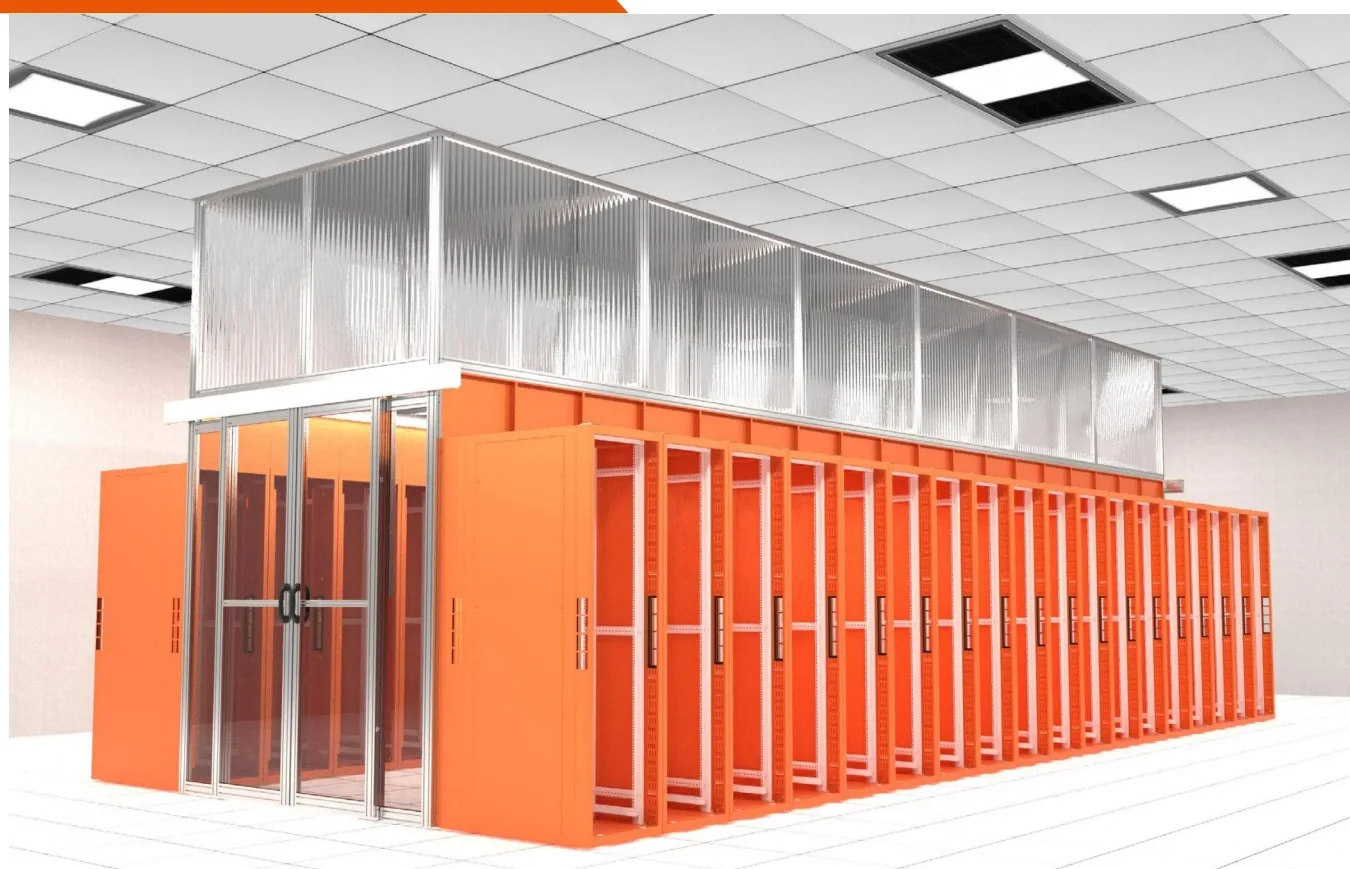 JZ-CA Series Cold Aisle Containment System Modular skylights, doors and seals that separate cold supply from hot return. View details
Need this configured for your project?
Send the rack elevation, power load and quantity. We will confirm dimensions, outlet types and lead time.
Get a Quote