Tower UPS
1–200 kVA double-conversion UPS for smaller and fixed loads.
A tower UPS covers 1 kVA to 200 kVA with 1/1, 3/1 or 3/3 input and double-conversion online topology. Typical efficiency is 94% to 96%, output power factor is 0.9 to 1.0, and battery runtime is 5 to 30 minutes with standard or extended batteries.
Last reviewed: 2026-11-07
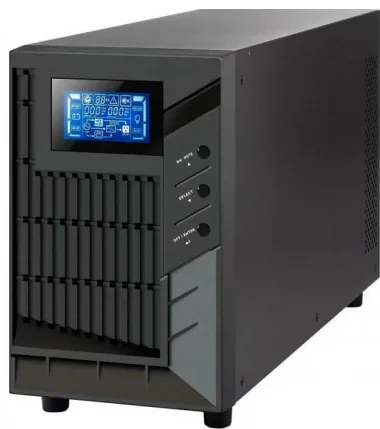
The tower range covers 1 kVA to 200 kVA in single-phase and three-phase configurations. It is a straightforward choice for edge rooms, branch offices and laboratory equipment where the load is known and unlikely to grow in large steps.
Input/output modes include single/single, three/single and three/three depending on capacity. Output voltage is selectable for 380/400/415 V or 200/208/220/230/240 V systems.
- 1–200 kVA range
- Single-phase and three-phase input
- Double-conversion online
- LCD control panel
- Standard or extended battery
- SNMP monitoring option
Technical specifications
| Capacity | 1 kVA – 200 kVA |
|---|---|
| Input modes | 1/1, 3/1, 3/3 |
| Output voltage | 380/400/415 V or 200–240 V |
| Topology | Double-conversion online |
| Frequency | 40–70 Hz input |
| Battery | Standard or extended |
Typical applications
- 01 Edge and branch computer rooms
- 02 Laboratory and test equipment
- 03 Security and control systems
- 04 Small production lines
Where a tower UPS is used
A tower UPS is a fixed-capacity unit for server rooms, clinics, laboratories, retail sites and small industrial loads. It protects equipment from outages, voltage sags, surges, frequency variation and generator switching. The double-conversion topology supplies a clean sine wave regardless of the input quality.
Tower units are simpler and often cheaper than modular systems at a fixed load. They are available in single-phase and three-phase input, with output from 1 kVA to 200 kVA. For later expansion or module-level service, a modular UPS is more flexible.
Input, output and capacity
Common configurations are 1/1 (single-phase in, single-phase out), 3/1 (three-phase in, single-phase out) and 3/3 (three-phase in, three-phase out). Input voltage is typically 220–240 V single-phase or 380–415 V three-phase, with a wide input range and a 40–70 Hz frequency window.
Output power factor is 0.9 to 1.0. A 20 kVA unit with power factor 0.9 supports 18 kW; with power factor 1.0 it supports 20 kW. Confirm the load power factor and the overload curve before sizing the UPS.
Efficiency, batteries and runtime
Double-conversion efficiency is typically 94% to 96% at full load. ECO mode can reach about 98% on a stable grid. The charger supports VRLA or lithium batteries, with standard runtime of 5 to 15 minutes and extended runtime of 30 minutes or more.
Battery runtime depends on load, battery capacity and end-of-discharge voltage. For generator-backed sites, 10 to 15 minutes is often enough to start the generator and transfer the load. For sites without a generator, size the battery for an orderly shutdown.
Installation and room requirements
The UPS needs front access for operation and rear access for cabling, typically 800 mm in front and 600 mm at the rear. Keep the room temperature within the battery manufacturer's range, usually 20 °C to 25 °C, and provide ventilation for the UPS losses. At 95% efficiency, a 100 kVA UPS with 80 kW load produces about 4.2 kW of heat.
Connect the UPS to a dedicated input breaker, bond the enclosure to the room earth bar, and confirm the neutral and grounding arrangement. For three-phase input, check the phase rotation before energizing.
Selection, delivery and commissioning
Select the UPS by load kW, power factor, input phase, runtime, redundancy and room constraints. Add 20% to 30% headroom for future load. For a 30 kW IT load, a 40 kVA tower UPS with power factor 0.9 provides about 36 kW and reasonable headroom.
Typical lead time is 20 to 35 working days after drawing approval. Site work includes cable termination, battery connection, commissioning and a load test. Confirm the input/output voltage and plug or terminal type for the destination country.
Tower UPS reference specifications
| Item | Typical value | Notes |
|---|---|---|
| Capacity | 1–200 kVA | Model-dependent |
| Input modes | 1/1, 3/1, 3/3 | By site supply |
| Topology | Double-conversion online | VFI-SS-111 |
| Input voltage | 220–240 V / 380–415 V | Single / three phase |
| Input frequency | 40–70 Hz | Generator-friendly |
| Efficiency | 94–96% | Full load |
| ECO mode | About 98% | Stable grid |
| Output power factor | 0.9–1.0 | Confirm model |
| Overload | 110% 60 min / 125% 10 min | Confirm curve |
| Battery | VRLA / lithium | Internal or external |
| Runtime | 5–30 minutes | By battery size |
| Ingress protection | IP20 | Indoor room |
Configuration options
| Option | Choices | Typical use |
|---|---|---|
| Capacity | 1–200 kVA | By load |
| Input | 1/1, 3/1, 3/3 | Site supply |
| Battery | Internal / external | Runtime target |
| Runtime | 5 / 10 / 15 / 30 min | Generator start |
| Bypass | Static / maintenance | Service |
| Monitoring | SNMP / dry contact | BMS |
| Parallel | 2–4 units | Capacity or N+1 |
| Output | Terminal / socket | By current |
Packing and delivery reference
| Item | Typical value | Notes |
|---|---|---|
| Packing | Wooden crate | Seaworthy |
| Added dimensions | 80–120 mm per side | By model |
| Added weight | 50–300 kg | With batteries |
| Container quantity | 10–40 units per 40HQ | By capacity |
| Lead time | 20–35 working days | After drawing approval |
| Commissioning | 1–2 days | Load test |
Questions buyers ask
08 Q&A Can the tower UPS run on a generator?
How long does the standard battery last?
What size tower UPS do I need for a server room?
What is the difference between 1/1 and 3/3 UPS?
How long do tower UPS batteries last?
Can a tower UPS run on a generator?
Does a tower UPS need a maintenance bypass?
What is the lead time for a tower UPS?
Related products
JZ-UPS Series Modular UPS System 50–1200 kVA modular online UPS for centralized power rooms. View details 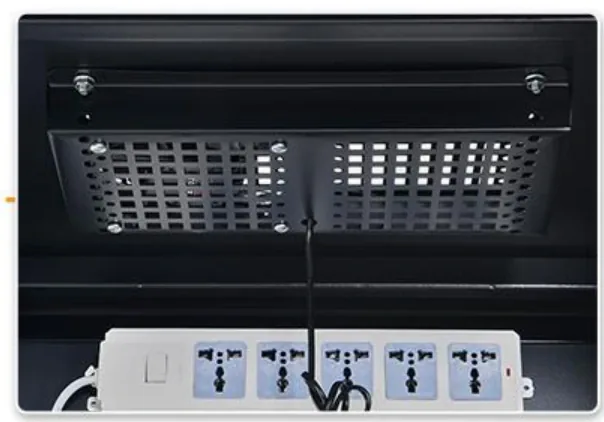 JZ-PDU Series Rack Power Distribution Unit 1U or 0U power distribution with optional breaker, SPD and metering. View details
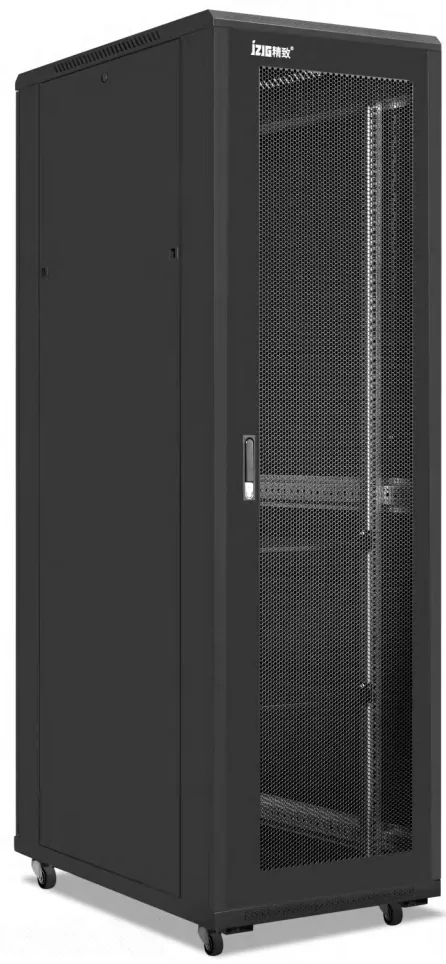 JZ-NC Series 42U Network Cabinet A 600 × 800 mm floor cabinet for switches, patching and small servers. View details
Need this configured for your project?
Send the rack elevation, power load and quantity. We will confirm dimensions, outlet types and lead time.
Get a Quote