42U Network Cabinet
A 600 × 800 mm floor cabinet for switches, patching and small servers.
A 42U network cabinet provides 42 × 44.45 mm = 1,866.9 mm of mounting height in a 600 × 800 mm footprint. Typical static load is 500 kg, with 600 mm or 800 mm depth for switches and patch panels. Allow about 1,000 mm front clearance and 800 mm rear clearance for doors and cabling.
Last reviewed: 2026-11-07
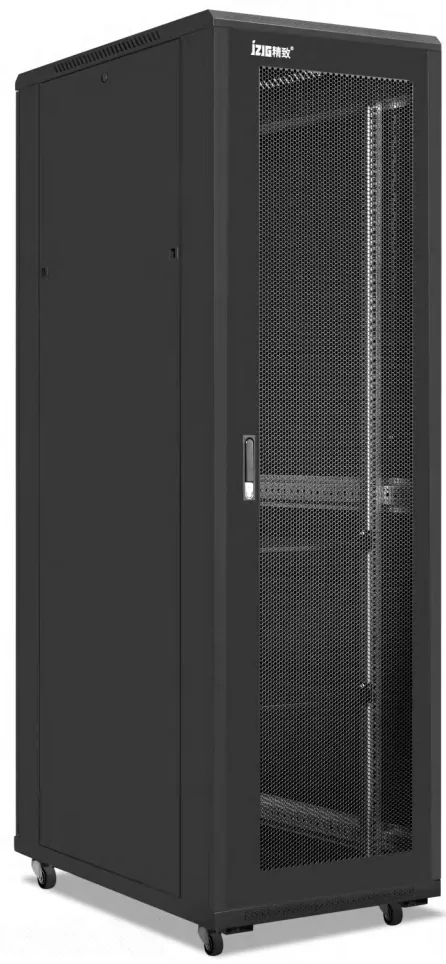
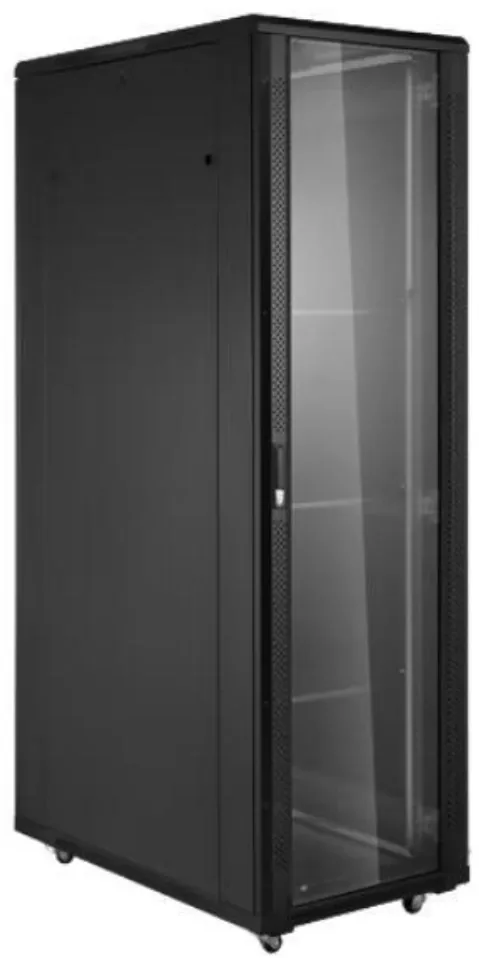
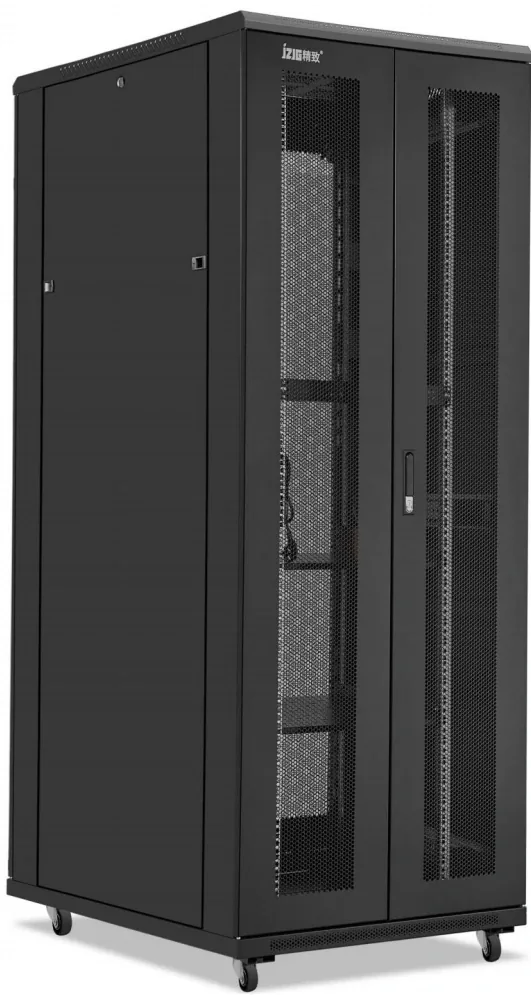
The JZ-NC Series is our general-purpose network cabinet for telecom rooms, floor distribution points and small server rooms. A welded steel frame carries the 19-inch mounting profiles; front and rear perforated doors provide a straight airflow path.
The cabinet is available from 18U to 47U, in 600 mm and 800 mm widths, with 600 mm to 1200 mm depths. Side panels are removable for bayed installation, and the rear door can be split for narrow rooms.
Accessories are selected at order: fixed or sliding shelves, cable rings, fan trays, PDU brackets, casters, leveling feet and baying kits. The cabinet is shipped assembled on a pallet unless a flat-pack is requested.
- Welded steel frame with adjustable 19-inch profiles
- Perforated front and rear doors for front-to-rear airflow
- Removable side panels and split rear door
- Top and bottom cable entries with brush strips
- Casters and leveling feet supplied as a set
- Compatible with RackSource shelves, PDUs and fan trays
Technical specifications
| Height | 18U – 47U |
|---|---|
| Width | 600 mm / 800 mm |
| Depth | 600 / 800 / 1000 / 1200 mm |
| Material | SPCC cold-rolled steel |
| Panel thickness | 1.2–2.0 mm by part |
| Finish | Electrostatic powder coating, RAL standard |
| Standard | 19-inch EIA-310 / IEC 60297 |
Typical applications
- 01 Telecom rooms and floor distribution points
- 02 Small server rooms with switches and patching
- 03 CCTV and access-control head-end rooms
- 04 Branch offices and retail back rooms
What a 42U network cabinet is used for
A 42U network cabinet is a closed 19-inch enclosure for switches, routers, patch panels, CCTV encoders and access-control equipment. The 42U height gives 1,866.9 mm of usable mounting space, which is enough for a full telecom room, a floor distribution point or a small server room without the depth and cost of a server cabinet.
The cabinet is normally 600 mm or 800 mm wide and 600 mm to 800 mm deep. That footprint fits through standard service doors and leaves room for vertical cable managers on both sides. Front and rear access let technicians terminate copper and fiber without removing the cabinet from the wall or row.
Dimensions and usable mounting space
The 19-inch mounting opening follows EIA-310 and IEC 60297. One U is 44.45 mm, so 42U is 1,866.9 mm nominal mounting height; the outside height is typically 2,000 mm to 2,050 mm once the frame, plinth and top panel are included. Always use the factory drawing for the final outside height because castors and cable-entry plates change it.
Usable depth is smaller than the nominal depth. A 600 mm deep cabinet leaves about 500 mm between the front door and the rear mounting profile, which suits shallow switches and patch panels. An 800 mm deep cabinet leaves about 700 mm and is the safer choice for deep switches, cable managers and rear-mounted PDUs.
Load, airflow and cable management
A typical 42U network cabinet carries 300 kg to 500 kg static load when the load is distributed across the four corner posts and the cabinet is fixed to the floor. For project work, confirm the floor loading, the plinth type and the seismic requirement before ordering. Castors are for movement only; do not rely on them for permanent load support.
Network equipment produces less heat than servers, but PoE switches and dense patch fields still need airflow. Perforated front and rear doors, blanking panels and a top-mounted fan tray keep intake and exhaust paths separate. Vertical cable managers on both sides keep patch cords out of the airflow path and reduce accidental unplugging during maintenance.
Doors, locks and configuration options
The standard configuration uses a lockable tempered-glass front door, a perforated steel rear door and removable side panels. Glass gives visual inspection in shared rooms; a mesh door gives better airflow for PoE-heavy installations. Both door types can be supplied with a swing handle and a keyed or combination lock.
Optional items include 1U and 2U vented shelves, 19-inch PDU mounting brackets, fan trays, brush cable entries, baying kits and castors. A baying kit joins two or more cabinets into a continuous row and shares the side panels, which reduces cost and keeps cable routes aligned.
Packing, installation and delivery
Cabinets are packed in a carton with edge protection and a wooden pallet for sea freight. Typical packing adds 50 mm to 80 mm to each dimension and 15 kg to 25 kg to the net weight. A 42U cabinet normally ships assembled; flat-pack versions are available when the access route or lift is too small.
Installation requires a level floor, a minimum 1,000 mm front clearance and 800 mm rear clearance. Fix the cabinet to the floor before loading equipment, bond it to the room earth bar, and route power and data cables through separate entries. Typical production lead time is 15 to 25 working days after drawing approval, with 1 unit as the minimum order.
42U network cabinet reference specifications
| Item | Typical value | Notes |
|---|---|---|
| Height | 42U (1,866.9 mm mounting) | Outside height about 2,000–2,050 mm |
| Width | 600 mm / 800 mm | 800 mm for side cable managers |
| Depth | 600 mm / 800 mm | 600 mm for shallow switches |
| Static load | 300–500 kg | Confirm floor and plinth |
| Material | SPCC cold-rolled steel | 1.2–2.0 mm by part |
| Front door | Tempered glass or mesh | Lockable, reversible |
| Rear door | Perforated steel | Split or single |
| Finish | Powder coating, RAL | Black or grey standard |
| Standard | EIA-310 / IEC 60297 | 19-inch mounting |
| Ingress protection | IP20 | Indoor use |
| Cable entry | Top and bottom | Brush or gland plate |
| Packaging | Carton + pallet | Assembled shipment |
Configuration options
| Option | Choices | Typical use |
|---|---|---|
| Front door | Glass / mesh / solid | Visibility vs airflow |
| Side panels | Removable / fixed | Baying or stand-alone |
| PDU | 1U horizontal / 0U vertical | 16 A or 32 A input |
| Fan tray | 2-fan / 4-fan | PoE and dense patching |
| Shelves | 1U / 2U vented | Small UPS and modems |
| Castors | Heavy-duty braked | Positioning before fixing |
| Baying kit | 2–6 cabinets | Continuous row |
| Lock | Key / combination | Shared rooms |
Packing and delivery reference
| Item | Typical value | Notes |
|---|---|---|
| Packing | Carton on pallet | Edge protection |
| Added dimensions | 50–80 mm per side | Varies by model |
| Added weight | 15–25 kg | Including pallet |
| Container quantity | About 20–30 units per 40HQ | Depends on height |
| Lead time | 15–25 working days | After drawing approval |
| Minimum order | 1 unit | Mixed models accepted |
Questions buyers ask
09 Q&A Can I order a 600 mm wide cabinet with a 1000 mm depth?
Is the cabinet suitable for shipping assembled?
Can the cabinet be supplied with a PDU?
What are the outside dimensions of a 42U network cabinet?
How much weight can a 42U network cabinet hold?
Is 600 mm deep enough for a network cabinet?
Does a network cabinet need cooling?
Can I install a PDU and patch panels in the same cabinet?
What is the difference between a network cabinet and a server cabinet?
Related products
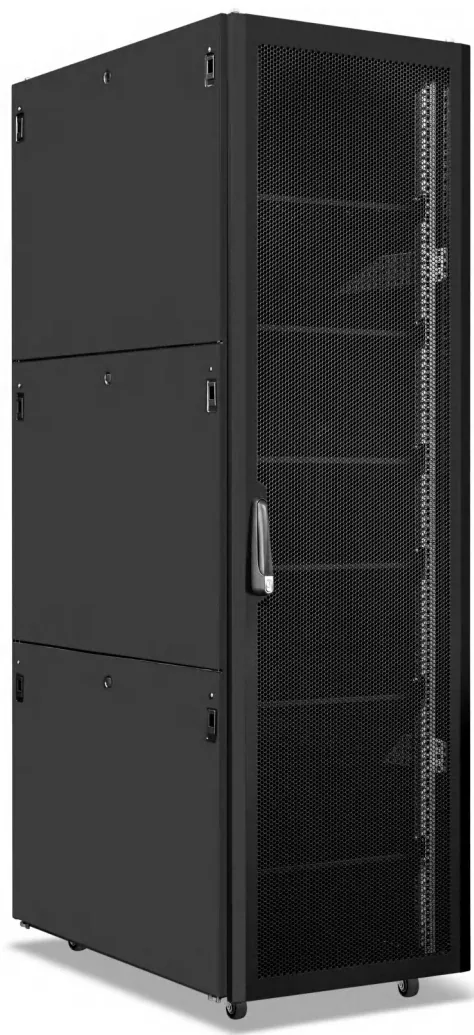 JZ-SC Series 42U Server Cabinet A 1200 mm deep, high-load frame for rack servers and GPU nodes. View details
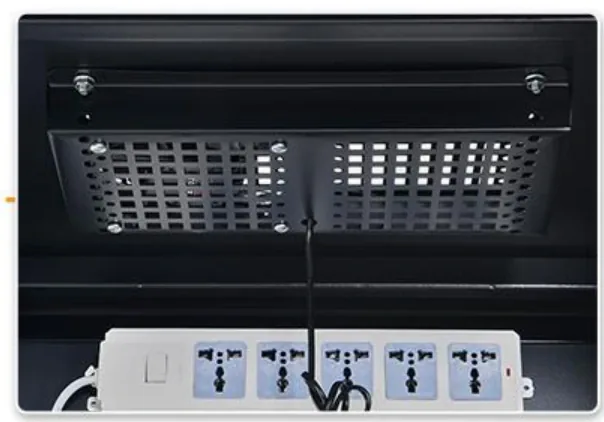 JZ-PDU Series Rack Power Distribution Unit 1U or 0U power distribution with optional breaker, SPD and metering. View details
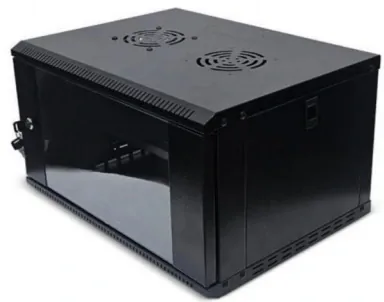 JZ-WM Series 12U Wall-Mount Cabinet A compact lockable enclosure for floor and edge distribution. View details
Need this configured for your project?
Send the rack elevation, power load and quantity. We will confirm dimensions, outlet types and lead time.
Get a Quote