Outdoor Server and Telecom Cabinet — Weather Protection and Cooling
Outdoor cabinets with rain hoods, filtered ventilation and optional cooling for edge and telecom sites.
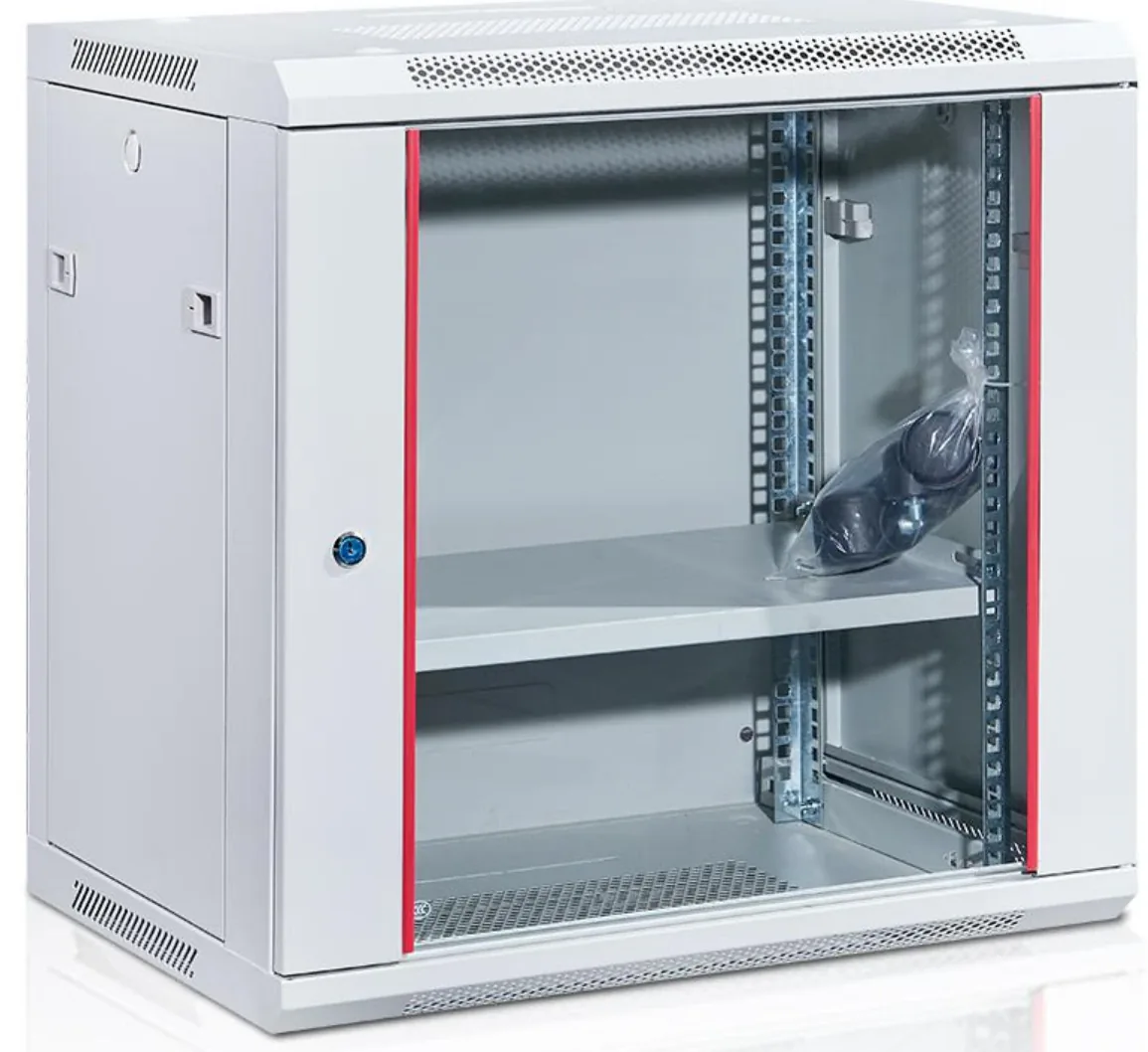
An outdoor cabinet protects telecom and edge equipment with double-wall insulated steel and IP55 or IP65 sealing. Sizes range from 6U to 42U, cooling is 300 W to 3 kW by fan, heat exchanger or air conditioner, and typical lead time is 20 to 30 working days.
Last reviewed: 2026-11-07
Outdoor cabinets are used for 5G, telecom, roadside and industrial sites. Double-wall construction and insulation reduce solar gain.
Sealed cable entries and a rain hood are baseline; the IP rating and cooling configuration should be stated in the project specification.
Best for
- 5G and telecom edge sites
- Roadside and industrial yards
- Sites without a shelter
Key specifications
Outdoor cooling selection
| Heat load | Cooling | Typical use |
|---|---|---|
| Low | Filtered fan | Small edge cabinets |
| Medium | Heat exchanger | Dusty sites |
| High | Cabinet AC | Hot climates |
How to choose
Check the climate
Ambient temperature, solar load and dust determine the cooling type.
Define IP and finish
State the required IP rating and corrosion class.
Plan service access
Leave door clearance and a maintenance route.
IP55 vs IP65
IP55 protects against dust ingress and water jets from any direction. It is the common choice for telecom, 5G and roadside cabinets. IP65 is dust-tight and protects against higher-pressure water jets, for very dusty, coastal or wash-down sites.
Higher IP protection reduces airflow and increases cooling difficulty. Choose the lowest rating that meets the site conditions, and confirm the salt-spray and paint system for coastal sites.
Construction and thermal design
The cabinet uses double-wall steel with insulation between the walls. The outer wall is powder-coated; the inner wall protects the equipment. Door seals are EPDM or silicone, and cable entries use gland plates or sealed connectors.
Cooling options are a filtered fan, a heat exchanger and a closed-loop air conditioner. A fan is the lowest cost but brings dust in; a heat exchanger keeps the cabinet sealed; an air conditioner is used when the outside temperature is too high for the equipment.
Power, batteries and security
Outdoor cabinets often include a PDU, a thermostat, a door alarm and a battery compartment. Battery life is sensitive to temperature; keep the battery bay within the manufacturer's range and use a heater or air conditioner as needed.
Use a three-point lock, a padlockable handle and a door sensor. For remote sites, add temperature, humidity and intrusion alarms to the monitoring system.
Installation and delivery
Mount the cabinet on a level concrete plinth, a pole or a wall. Leave 800 mm in front and 600 mm at the rear for service. Connect the cabinet to the site earth bar and install surge protection on power and signal lines.
Typical lead time is 20 to 30 working days after drawing approval. Options include a sun shield, a heater, a battery bay and a pole-mounting kit.
Outdoor cabinet reference
| Item | Typical value | Notes |
|---|---|---|
| Height | 6U–42U | By equipment |
| Width | 600 / 800 mm | By layout |
| Depth | 600–1,500 mm | By cooling |
| IP rating | IP55 / IP65 | Site conditions |
| Construction | Double-wall steel | Insulated |
| Cooling | Fan / heat exchanger / AC | 300 W–3 kW |
| Battery bay | Optional | Temperature control |
| Finish | Outdoor powder coating | C5-M optional |
| Lead time | 20–30 days | After drawing |
Cooling options
| Option | Typical capacity | Best for |
|---|---|---|
| Filtered fan | 300–800 W | Mild, clean sites |
| Heat exchanger | 500–1,500 W | Sealed enclosure |
| Air conditioner | 1–3 kW | Hot climates |
| Thermoelectric | 100–300 W | Small loads |
| Free cooling | Site-dependent | Cold climates |
Outdoor cabinet options
| Option | Choices | Use |
|---|---|---|
| IP rating | IP55 / IP65 | Dust and water |
| Cooling | Fan / HX / AC | Heat load |
| Battery bay | Yes / no | Backup |
| Sun shield | Yes / no | Hot sites |
| Heater | Yes / no | Cold sites |
| Pole mount | Yes / no | No plinth |
Frequently asked questions
08 Q&A What is an IP54 outdoor cabinet?
Can an outdoor cabinet use a fan?
Are batteries installed inside?
What IP rating does an outdoor cabinet need?
How is an outdoor cabinet cooled?
Can an outdoor cabinet hold batteries?
What is the difference between IP55 and IP65?
What is the lead time for an outdoor cabinet?
Send us your rack schedule or floor plan
Share cabinet quantities, U heights, power loads and the destination port. Our engineering team will confirm the configuration, drawing and production lead time.
Request a quotation