24-Port Cat6 Patch Panel
Unitary PCB patch panel tested to ISO/IEC 11801 and TIA/EIA-568-C.
A 24-port Cat6 patch panel terminates 24 copper links in 1U of rack space and supports 250 MHz, enough for 10GBASE-T up to about 55 m. It uses 568A or 568B wiring, 22–26 AWG solid cable and gold-plated contacts, and is tested to ISO/IEC 11801 and TIA/EIA-568-C.
Last reviewed: 2026-11-07
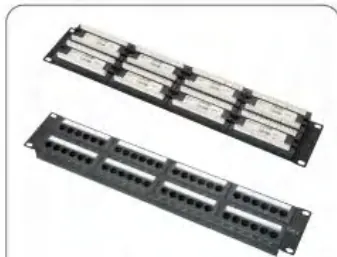
The JZ-P2612L-C6 is a 24-port Cat6 patch panel for 19-inch racks. The unitary PCB design keeps pair geometry stable and simplifies termination.
It is designed for structured cabling in offices, campuses and data centers where Cat6 copper links are used for 1G and 10G access.
- 24 Cat6 ports in 1U
- Unitary PCB construction
- ISO/IEC 11801 and TIA/EIA-568-C compliant
- Rear cable management bar
- Label window per port
- 19-inch mounting brackets
Technical specifications
| Model | JZ-P2612L-C6 |
|---|---|
| Ports | 24 |
| Category | Cat6 |
| Shielding | Unshielded (UTP) |
| Height | 1U |
| Standard | ISO/IEC 11801, TIA/EIA-568-C |
Typical applications
- 01 Office and campus structured cabling
- 02 Data center copper aggregation
- 03 Telecom rooms and floor distributors
What a 24-port Cat6 patch panel does
A patch panel is the fixed termination point between horizontal cabling and active equipment. The 24-port Cat6 panel mounts in 1U of a 19-inch rack and provides 24 RJ45 ports on the front, with punch-down terminals on the rear for solid copper cable.
It keeps the horizontal cabling organized, protects the cable from repeated movement, and makes moves, adds and changes a patch-cord task instead of a re-termination task. A 24-port panel is the standard building block for telecom rooms and floor distribution points.
Category, frequency and distance
Cat6 cable and panels are rated to 250 MHz. That supports 1GBASE-T to 100 m and 10GBASE-T to about 55 m in a well-installed link. For 10GBASE-T to 100 m, use Cat6A cable and a Cat6A panel.
The panel must match the cable category and the connector. Mixing Cat6 panels with Cat5e cable limits the link to Cat5e performance. Use the same category for the panel, the cable, the keystone jacks and the patch cords.
Wiring, contacts and installation
The rear terminals accept 22–26 AWG solid copper cable and are color-coded for T568A or T568B. Choose one wiring standard for the whole site and record it. The front contacts are usually gold-plated over nickel, with 50 microinches of gold as a common specification.
Mount the panel at the top of the rack or below the switches, leaving 1U for cable management. Use a cable support bar or hook-and-loop straps to support the cable weight. Keep the bend radius at least four times the cable diameter and avoid tight zip ties.
Testing and documentation
After termination, test each link with a certifier or a continuity tester. For Cat6, the permanent link test covers insertion loss, return loss, NEXT, PS NEXT, ACR-F and propagation delay. Keep the test reports for the project handover.
Label each port with the room, rack and outlet number. A consistent labeling scheme saves hours during moves and troubleshooting. Update the patch schedule whenever a cord is changed.
Options, packing and delivery
Options include a cable support bar, a rear cable manager, a label window, a dust shutter and a shielded version. The panel is usually black or grey powder-coated steel. A 24-port panel ships in a carton with cage nuts, screws and a wiring label.
Typical lead time is 15 to 20 working days after order confirmation, with 50 units as a common minimum order. Confirm the wiring standard, the port labeling and the test requirement before production.
24-port Cat6 patch panel reference specifications
| Item | Typical value | Notes |
|---|---|---|
| Ports | 24 | RJ45 front |
| Category | Cat6 | 250 MHz |
| Shielding | UTP | Unshielded |
| Height | 1U | 19-inch rack |
| Wiring | T568A / T568B | Site standard |
| Cable gauge | 22–26 AWG | Solid copper |
| Contacts | Gold-plated | 50 µin typical |
| 10GBASE-T | Up to about 55 m | Cat6 link |
| Standard | ISO/IEC 11801 / TIA-568-C | Component |
| Operating temperature | -10 to 60 °C | Indoor |
| Housing | Steel, powder-coated | Black or grey |
| Packaging | Carton | Screws and label |
Configuration options
| Option | Choices | Typical use |
|---|---|---|
| Port count | 24 / 48 | Room size |
| Category | Cat5e / Cat6 / Cat6A | Link speed |
| Shielding | UTP / FTP | EMI environment |
| Wiring | T568A / T568B | Site standard |
| Cable bar | Yes / no | Cable support |
| Label window | Yes / no | Port identification |
| Dust shutter | Yes / no | Unused ports |
| Mounting | 19-inch / wall | Rack or wall |
Packing and delivery reference
| Item | Typical value | Notes |
|---|---|---|
| Packing | Carton | With screws |
| Added weight | 0.8–1.5 kg | By model |
| Container quantity | About 2,000–4,000 units per 40HQ | Carton size |
| Lead time | 15–20 working days | After order confirmation |
| Minimum order | 50 units | Standard model |
| Warranty | 2 years | Standard terms |
Questions buyers ask
08 Q&A Is this panel shielded?
Can it be used with Cat5e cable?
What is the difference between Cat6 and Cat6A patch panels?
Should I use T568A or T568B wiring?
Can I use a Cat6 patch panel with Cat5e cable?
How many patch panels do I need for 48 ports?
Do I need a cable support bar?
What is the lead time for a 24-port Cat6 patch panel?
Related products
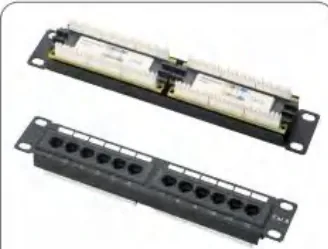 JZ-P2548-C6 48-Port Cat6 Patch Panel High-density Cat6 panel for crowded telecom rooms. View details
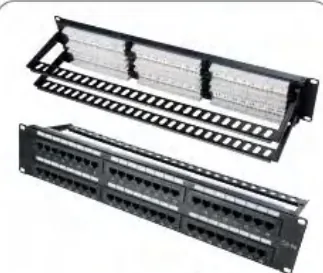 JZ-P5648S-C6A 48-Port Cat6A Shielded Patch Panel 10GBASE-T shielded panel with high port density. View details
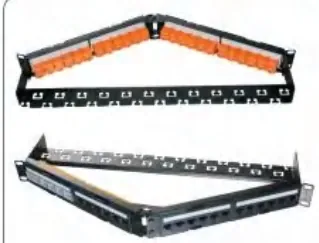 JZ-P2524-C5E 24-Port Cat5e Patch Panel Cost-effective Cat5e panel for voice and 1G data. View details
Need this configured for your project?
Send the rack elevation, power load and quantity. We will confirm dimensions, outlet types and lead time.
Get a Quote